Safe Systems Of Work (SSOW) For Early Education And Care
Not A Nice To Have. It is A WHS Requirement
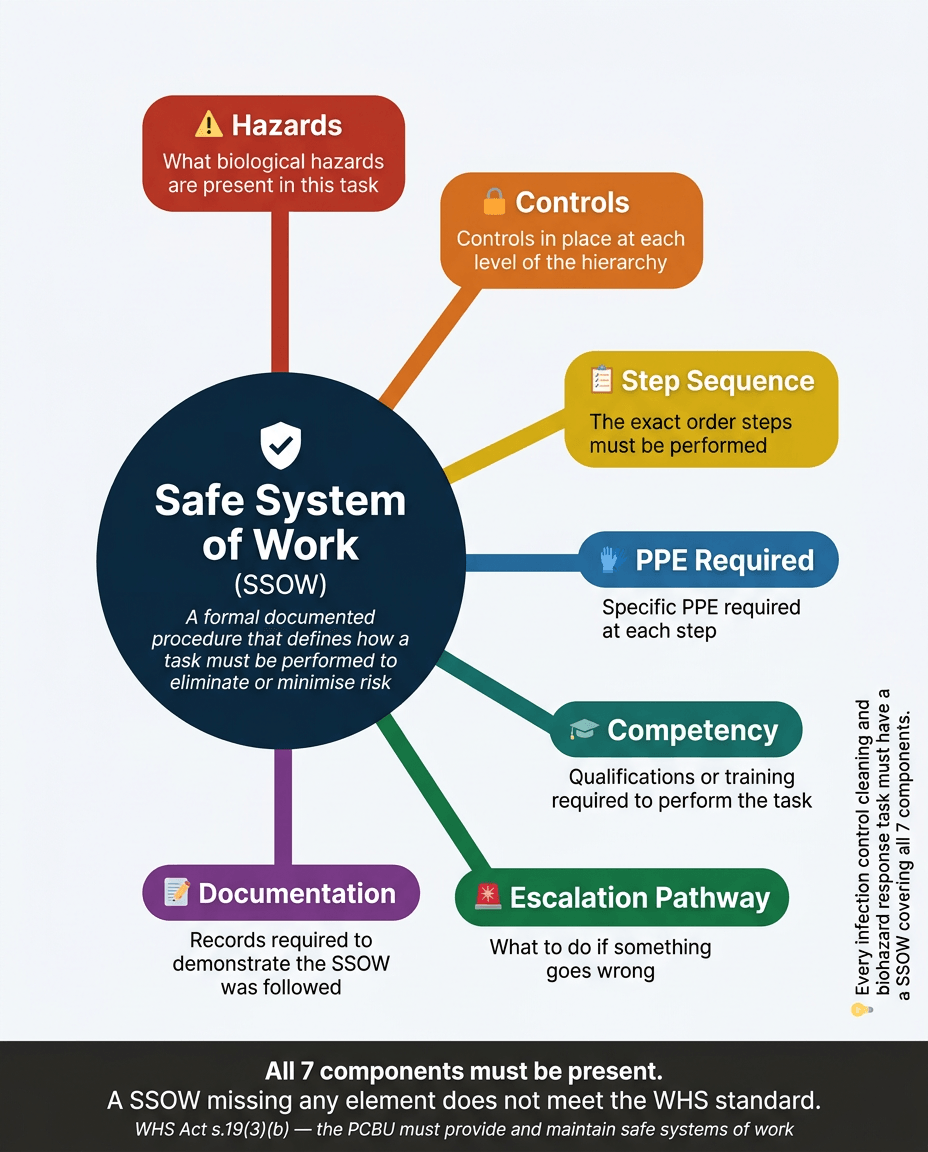
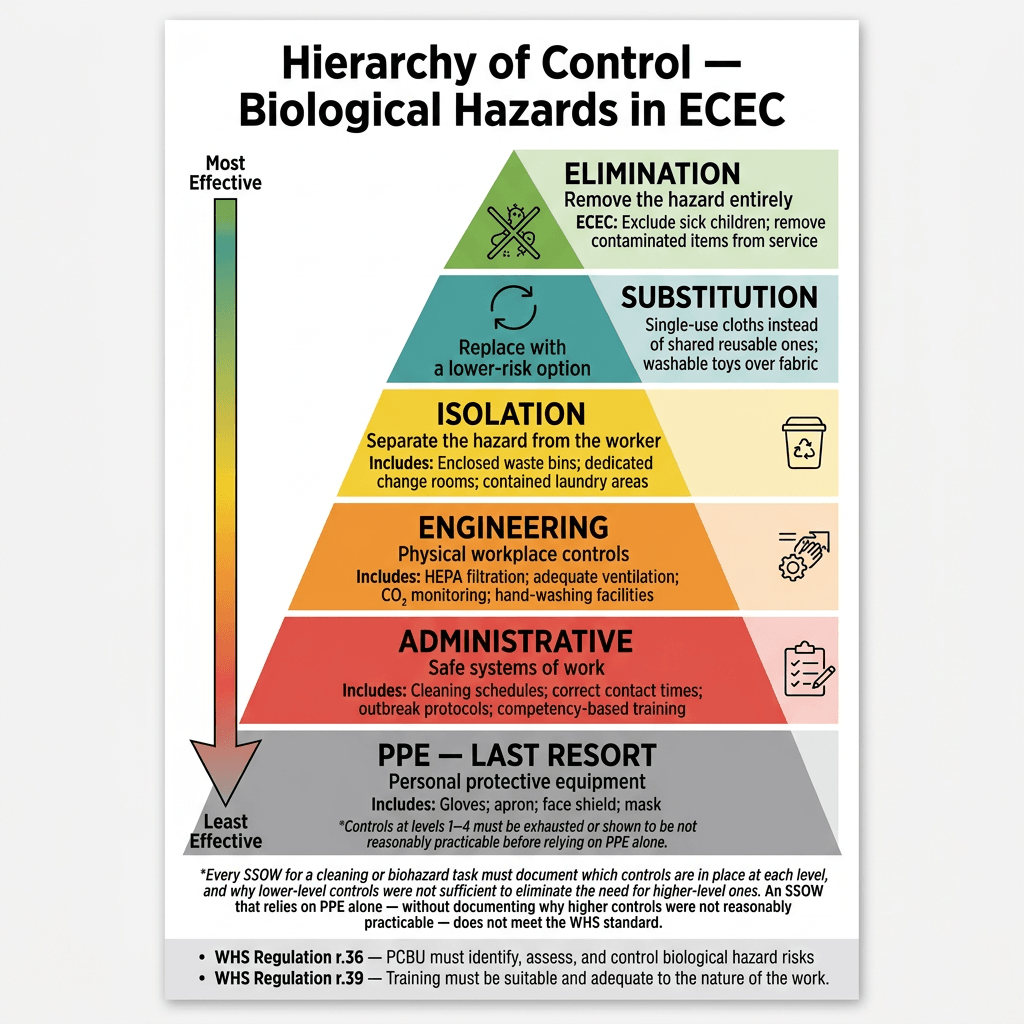
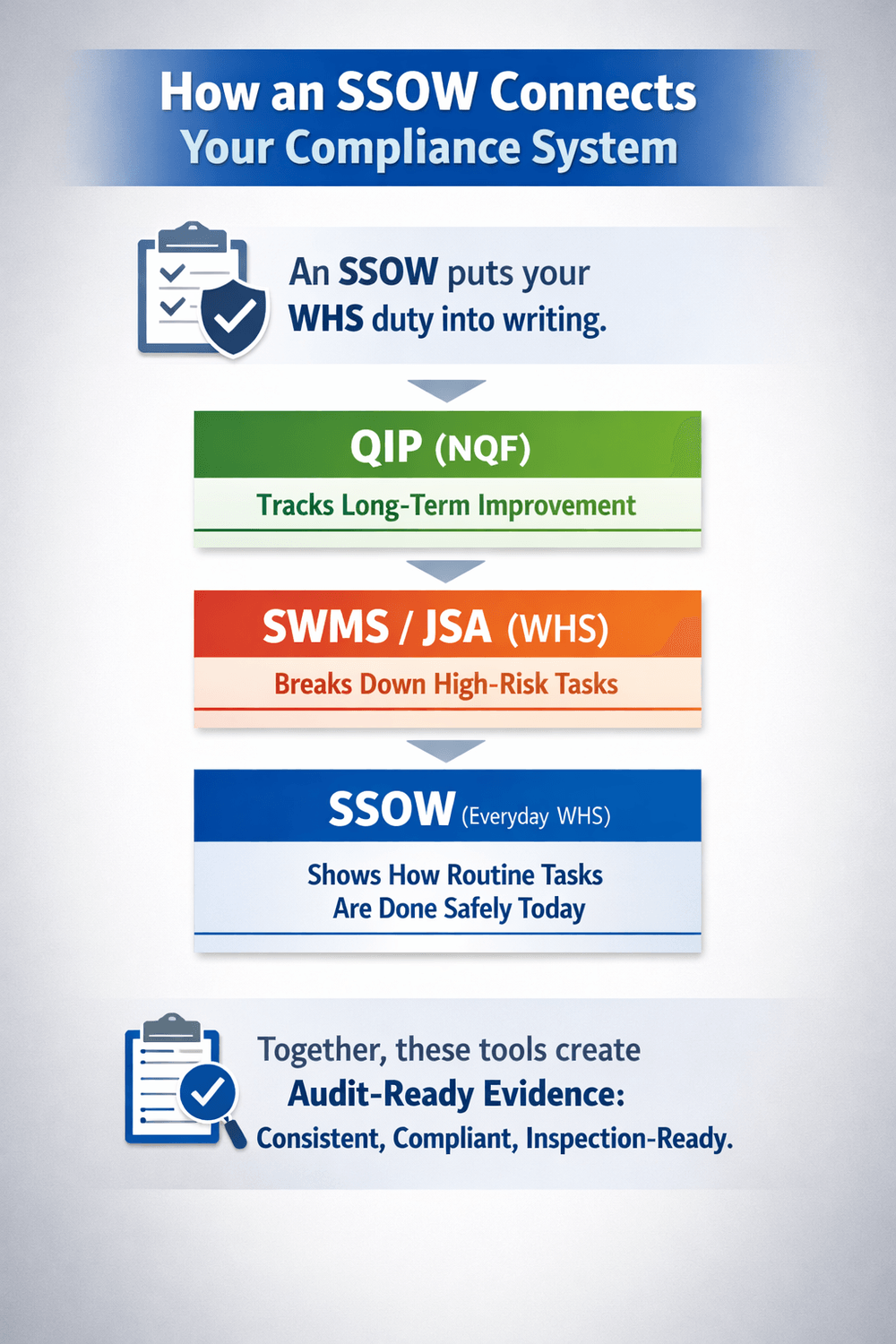
This isn't just good practice — it's a WHS requirement: under the Work Health and Safety Act and Regulations, every employer (PCBU) has a legal duty to provide and maintain safe systems of work, identify hazards, and put control measures in place. An SSOW is how you meet that duty in writing. It sits alongside the documents the sector already relies on.
It works alongside familiar sector documents
your QIP under the NQF tracks long‑term improvement,
SWMS or JSA breaks down high‑risk tasks.
SSOW is the everyday version:
it shows exactly how routine tasks are done safely today. Together, these tools create audit‑ready evidence that your service is consistent, compliant, and inspection ready
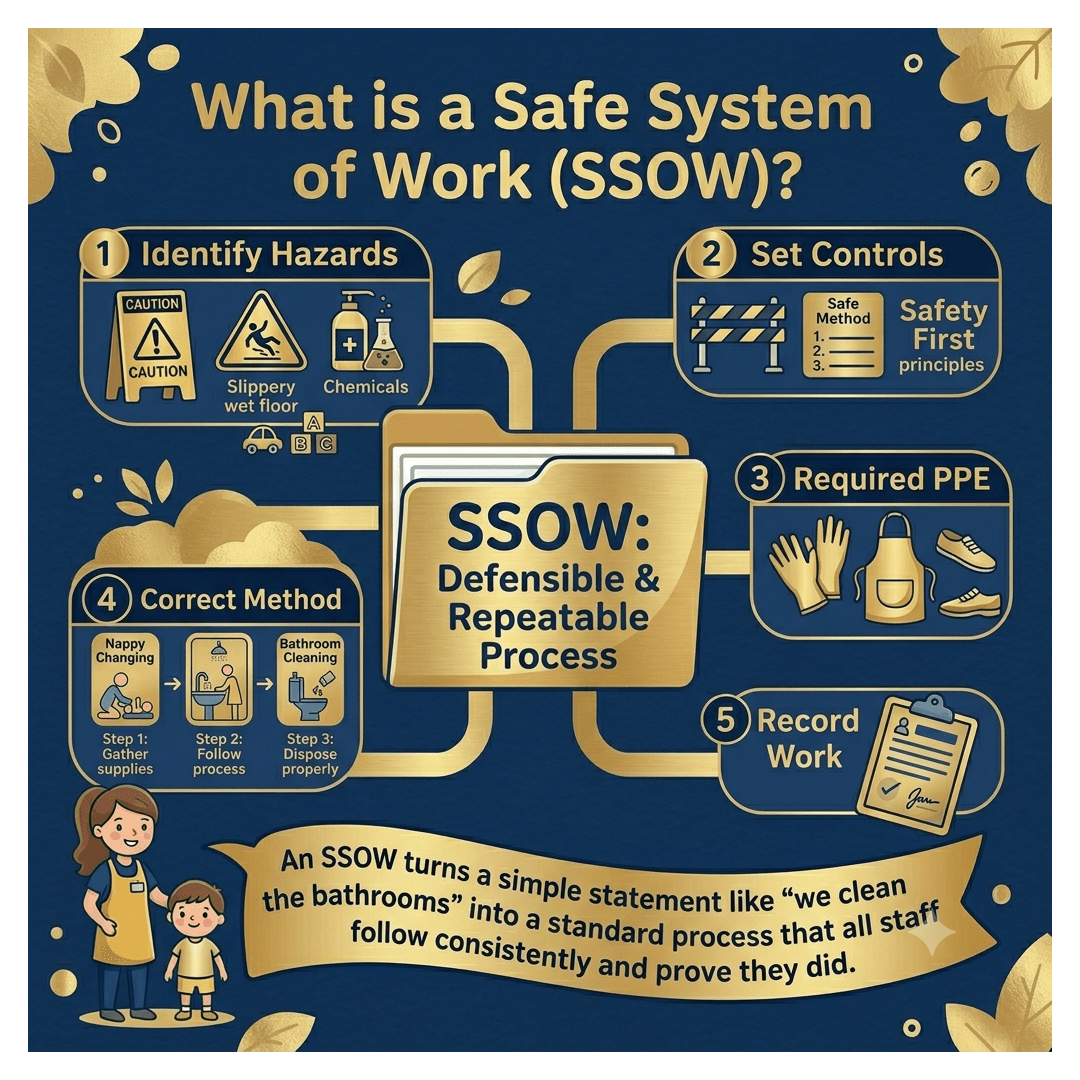
A Safe System of Work (SSOW) is a documented, step-by-step procedure for carrying out a task safely.
setting out the hazards, the controls, the PPE, the correct method and how the work is recorded.
For an early childhood centre, an SSOW turns
"we clean the bathrooms" into a defensible, repeatable process that any staff member can follow the same way, every time, and prove they did.
👇Choose the Right Option for Your Centre👇
Skip the bundle and choose only the SSOWs you want. Then, select your preferred format: DIY Template, Customised Digital, or a professionally printed and bound edition.
Get the ultimate compliance package. Purchase the complete 14-document SSOW set and enjoy massive savings! Choose the format that best fits your centre: get instant access with DIY Templates, go hassle-free with Customised Digital, or receive a beautifully printed and professionally bound version delivered straight to your door.
OUR SSOW Collection
14 industry-compliant Safe Systems of Work, fully tailored for early childhood environments.
🧼 Routine Cleaning 6 SSOW available
High-Touch Surface Disinfection How and how often to disinfect door handles, light switches, rails, taps and shared equipment to cut the touch-points that spread germs fastest.
Toilet & Children's Bathroom Clean and Disinfect The two-step clean-then-disinfect routine for toilets, bowls, flush buttons, basins and bathroom surfaces, your highest-risk area for spreading illness.
Toy Cleaning & Sanitation Safe cleaning and sanitising of toys, including managing mouthed toys, so shared play items don't become a source of cross-infection.
Sleep Surfaces Cot, Mattress & Sleep-Mat Sanitation A safe routine for cleaning and sanitising cots, mattresses and sleep mats between children to protect rest areas from cross-infection.
Kitchen & Food-Prep Surface Cleaning Keeps food-contact surfaces safe through clean/contaminated zoning and colour-coded equipment, supporting both WHS and food-safety compliance.
Floor Cleaning & Mopping — A safe sweep/vacuum and two-bucket mop method using colour-coded, zone-separated equipment to reduce slips and stop cross-contamination between rooms.
🧴 Supporting Hygiene 3 SSOW Available
Chemical Mixing, Dilution & Safe Use — Correct dilution ratios, no unsafe mixing, proper labelling and storage, protecting staff and children and underpinning every other procedure.
Linen & Laundry Handling — How soiled and clean linen is separated, washed and stored to stop cross-contamination from bedding, cloths and towels.
Cleaning Equipment Hygiene — How mops, cloths, buckets and colour-coded gear are cleaned, dried and stored so the tools you clean with never become the contamination source.
🧪 Biohazard & Outbreak 5 SSOWS
Urine & Faeces Spill Clean-Up — A containment-and-disinfection routine for urine and faeces incidents, with correct PPE, contact times and safe disposal.
Blood Spill Clean-Up — A defensible response that treats all blood as potentially infectious, with safe containment, disinfection and disposal against blood-borne risks.
Vomit Spill Clean-Up — A rapid isolate-contain-disinfect method for vomit, which spreads illness fast, covering correct products, contact times and disposal.
Nappy Change & Sanitation — A hygienic nappy-change routine protecting against faecal-oral transmission, with correct PPE, surface disinfection between changes and proper waste handling.
Outbreak Response & Enhanced Cleaning — Steps your centre up to enhanced cleaning during a suspected or confirmed outbreak, with increased frequency, stronger disinfection, isolation and recording.